
How Hypothecation Affects Car Insurance Claims & How to Remove It After Loan Closure
Super Policy Team •March 9, 2026 | 4 min read • 131 views
Super Policy Team •March 9, 2026 | 4 min read • 131 views
When you buy a car through a loan, a crucial term silently becomes part of your RC and insurance papers—hypothecation. Most car owners notice it only during claim settlement, car resale, or while renewing insurance.
This guide explains exactly what hypothecation means, how it affects you, and the correct process to remove it once your loan ends.
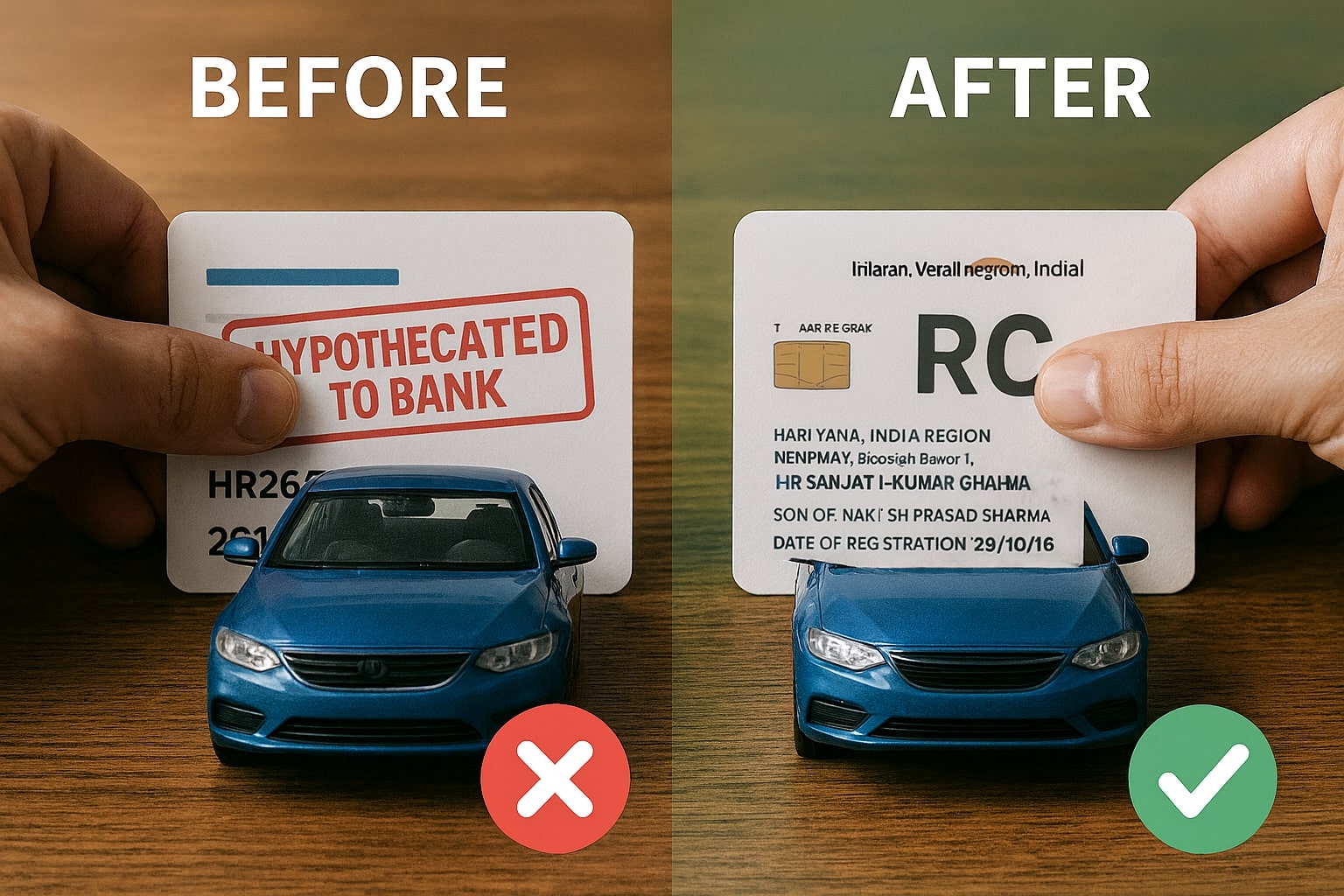
Hypothecation is the legal pledge of your car to the bank or NBFC from whom you have taken a loan. Although you use the vehicle, the lender retains financial interest until the loan is fully repaid.
On your Registration Certificate (RC)
On your car insurance policy
It will display something like: “Hypothecated to HDFC Bank Ltd.”
If your car is stolen or declared a total loss, the insurer must protect the lender’s outstanding dues.
For major claims, the insurer may require:
NOC from the lender
Or may settle directly with the bank
Until loan closure, you are not the sole legal owner; the lender shares partial financial ownership.
Rahul’s car worth ₹8 lakh gets completely damaged.
Insurance approves ₹6.5 lakh.
Since his outstanding loan was ₹5 lakh, the insurer pays the bank directly, and Rahul receives the remaining amount.
Meera wants to sell her car, but her RC shows hypothecation.
Most buyers refuse because ownership isn’t fully in her name.
She must first remove hypothecation before the sale goes through.
These practical situations prove why owners must remove hypothecation promptly after loan closure.
No major impact unless it's a total loss case, but lenders may insist on comprehensive coverage.
The bank may receive the claim amount first.
Generally unaffected, but insurer may confirm loan status for high-value repairs.
Insurer may ask for:
Loan details
Lender NOC for settlement in specific cases
Removing hypothecation requires updates at both RTO and your insurance provider.
Follow this clear checklist:
After loan closure, request:
NOC (No Objection Certificate)
Form 35 (official request to terminate hypothecation)
Timeline: 7–15 days
Validation: Ensure NOC is not more than 90 days old, as some RTOs reject expired NOCs.
You may apply through:
Parivahan portal (if your state supports online service)
Physical RTO visit
NOC from bank
Form 35
Original RC
Car insurance copy
PUC
Address proof
Aadhaar/PAN
Timeline: 7–30 days
Your new RC will:
Remove lender name
Show you as the sole owner
This is the most important step in establishing full ownership.
Share the updated RC with your insurer.
They will issue a revised insurance policy without hypothecation details.
Validation: Ensure the updated policy clearly shows only your name under owner details.
Many owners only update the RC and forget to update the insurance, leading to claim complications.
Some lenders issue NOCs valid for 90 days only.
RTO will not process removal without it.
Always keep copies of old RC and documents for records.
Yes, but the lender’s name will continue to appear in the policy until you remove it.
Typically 7–30 days, depending on your RTO’s workload.
Yes, it works similarly. The lender has a financial claim until the loan is repaid.
Technically yes, but buyers and dealers rarely accept it. Removal is recommended.
Insurance claims, ownership transfer, and resale may become complicated.
Hypothecation is a vital protection for lenders, but once your loan is paid off, removing it is essential for smooth ownership, faster claims, and better resale value.
If your car loan is closed, check your RC today. If it still shows the lender’s name, start the removal process immediately.
RTO procedures, fees, and document requirements may slightly vary across Indian states. Always verify with your regional transport office.
Get the latest articles delivered to your inbox